Visit Costa Rica
Volcanoes, rainforests, two ocean coastlines and some of the richest biodiversity on Earth.
One country, seven tourism regions
Costa Rica covers about 51,000 km² between the Pacific Ocean and the Caribbean Sea. It is home to nearly 5% of the world's biodiversity, and about a quarter of its territory is protected in national parks and reserves.
Administratively it is divided into seven provinces: San José, Alajuela, Cartago, Heredia, Guanacaste, Puntarenas and Limón. For tourism, the Costa Rican Tourism Institute presents the country in seven regions: Guanacaste, Northern Plains, Caribbean, Central Valley, Puntarenas, Central Pacific and South Pacific.
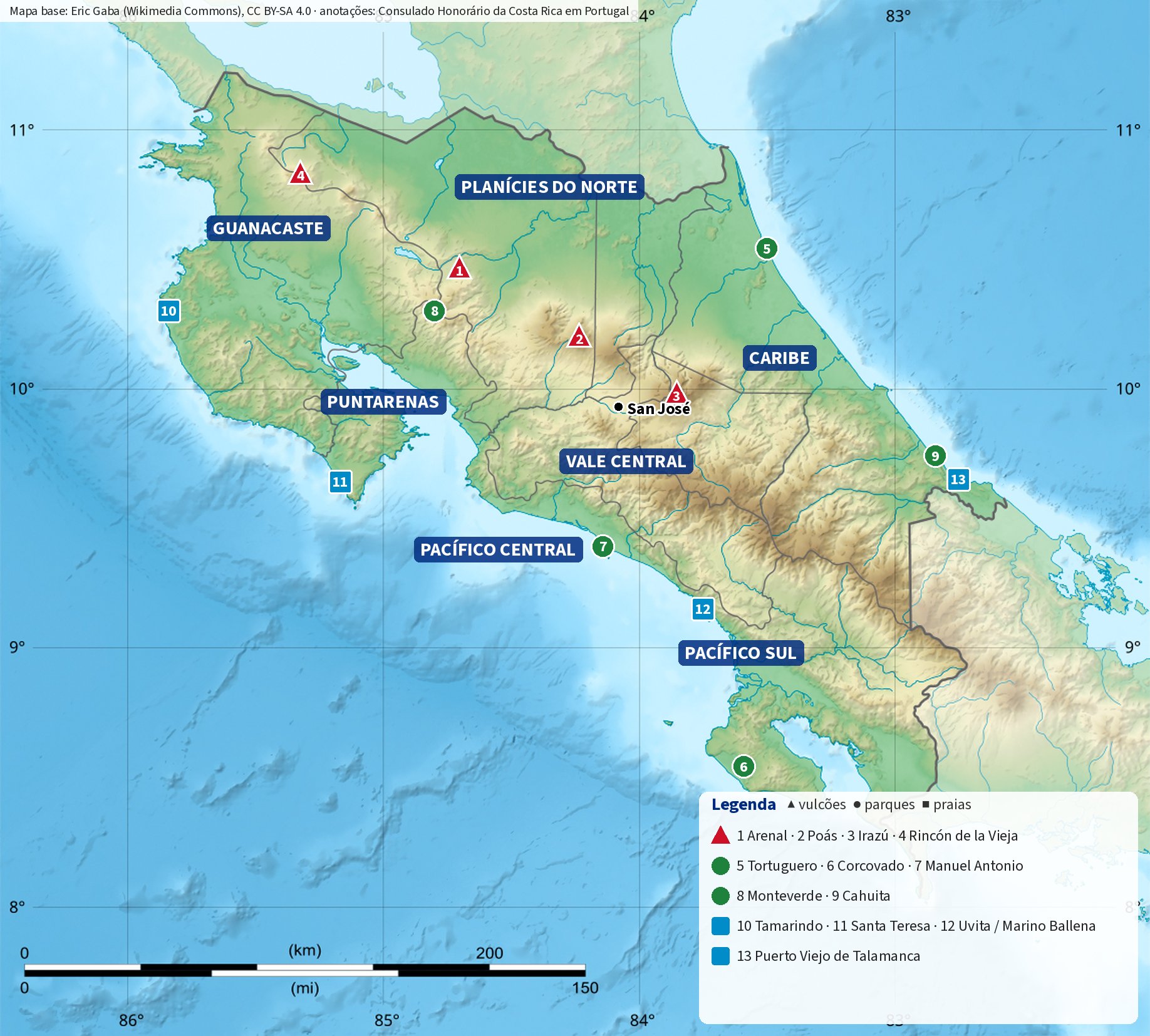
The regions
Highlights of each tourism region.
Guanacaste
The cradle of Costa Rican folklore. Tropical dry forest, beaches such as Tamarindo and Conchal, and Rincón de la Vieja volcano. Leatherback turtles nest in Las Baulas National Marine Park.
Northern Plains
Dominated by Arenal volcano, with protected forests, hot springs, rivers and waterfalls such as La Fortuna, and the Caño Negro wetlands.
Caribbean
Nature reserves and Afro-Caribbean culture. Tortuguero and its canals, the Cahuita coral reef and the beaches of Puerto Viejo de Talamanca.
Central Valley
Home to the capital, San José, with museums and theatres. Coffee plantations and the Poás and Irazú volcanoes, a short distance from the city.
Puntarenas
A coastline of inlets and islands in the Gulf of Nicoya. The Monteverde cloud forest and beaches such as Santa Teresa and Montezuma.
Central Pacific
Manuel Antonio National Park, beaches such as Jacó, scarlet macaw watching in Carara, sport fishing and rural tourism.
South Pacific
One of the best-preserved regions: the Osa Peninsula and Corcovado National Park, and Marino Ballena National Park in Uvita, with whale watching.
More information
Itineraries, accommodation and activities on Costa Rica's official tourism portal.
Nature by theme
Volcanoes
Arenal (Northern Plains), Poás and Irazú (Central Valley), Rincón de la Vieja (Guanacaste) and Turrialba. Irazú is the highest in the country. Access to volcano parks may be restricted due to volcanic activity: check with SINAC.
Beaches
On the Pacific: Tamarindo, Conchal, Santa Teresa, Manuel Antonio, Jacó and Uvita. On the Caribbean: Cahuita and Puerto Viejo, with coral reefs. Respect the safety flags and use reef-safe sunscreen.
National parks
Corcovado, Tortuguero, Manuel Antonio, Cahuita, Rincón de la Vieja and Carara are some of the parks managed by the National System of Conservation Areas (SINAC). Some areas require advance booking.
Wildlife
Sloths, toucans, red-eyed tree frogs, quetzals, macaws, sea turtles, monkeys and morpho butterflies. Turtles nest in Tortuguero and Las Baulas.
Wildlife of Costa Rica
Some emblematic species you can see.
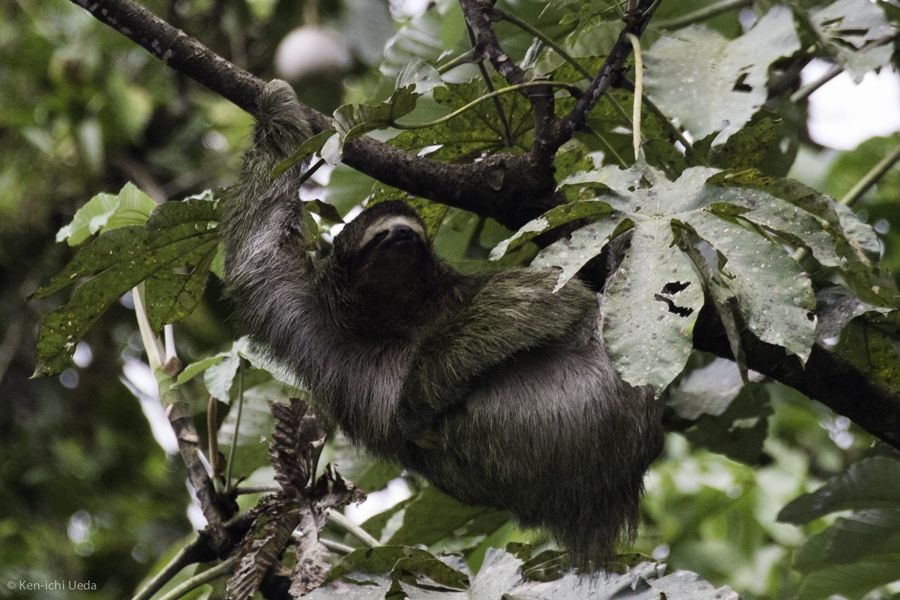
Three-toed sloth
Bradypus variegatus. Lives in the forest canopy, for example in Braulio Carrillo National Park.
Photo: Ken-ichi Ueda, CC BY 4.0 (Wikimedia Commons)
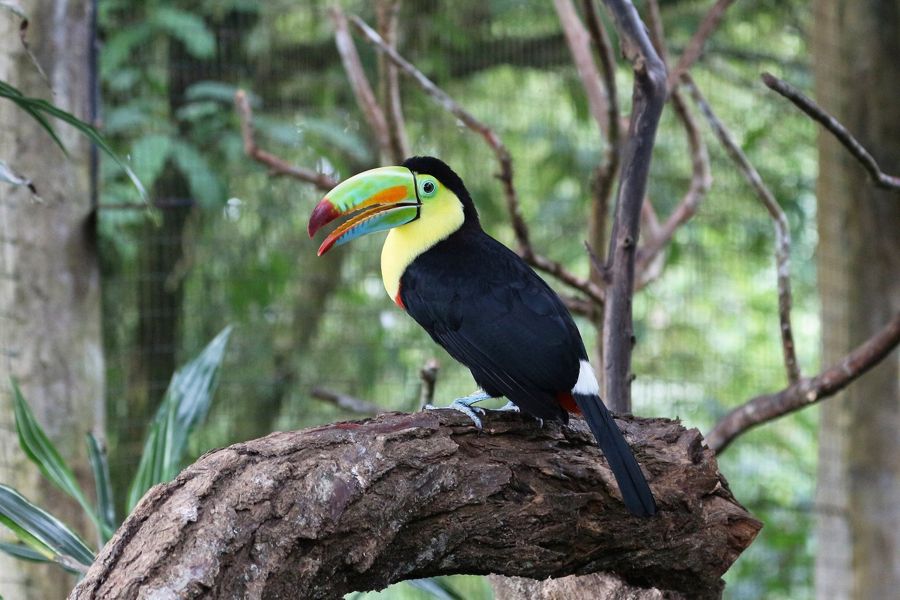
Keel-billed toucan
Ramphastos sulfuratus. Found in rainforests and nature reserves.
Photo: Bernard Gagnon, CC0 (Wikimedia Commons)
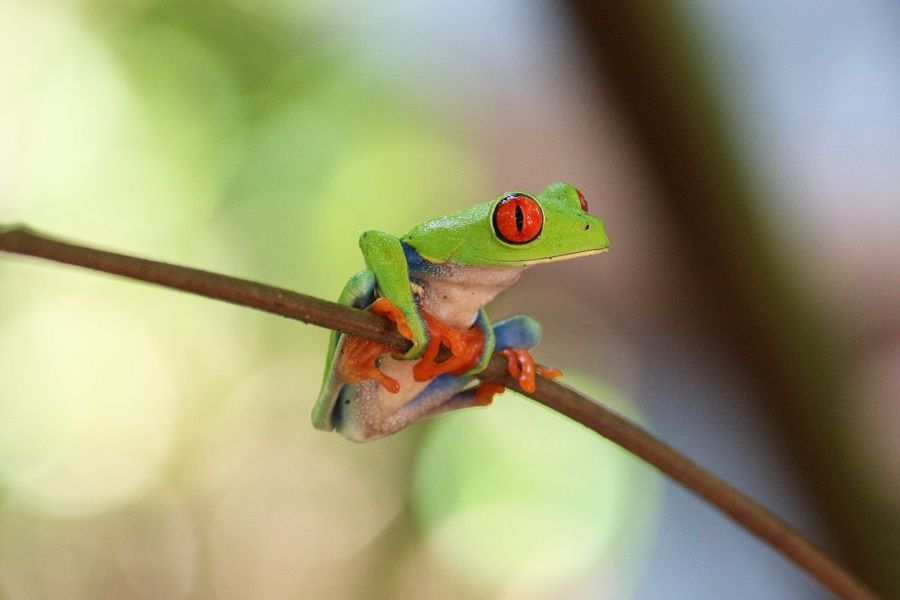
Red-eyed tree frog
Agalychnis callidryas. A nocturnal amphibian, emblem of the rainforests.
Photo: Bernard Gagnon, CC0 (Wikimedia Commons)
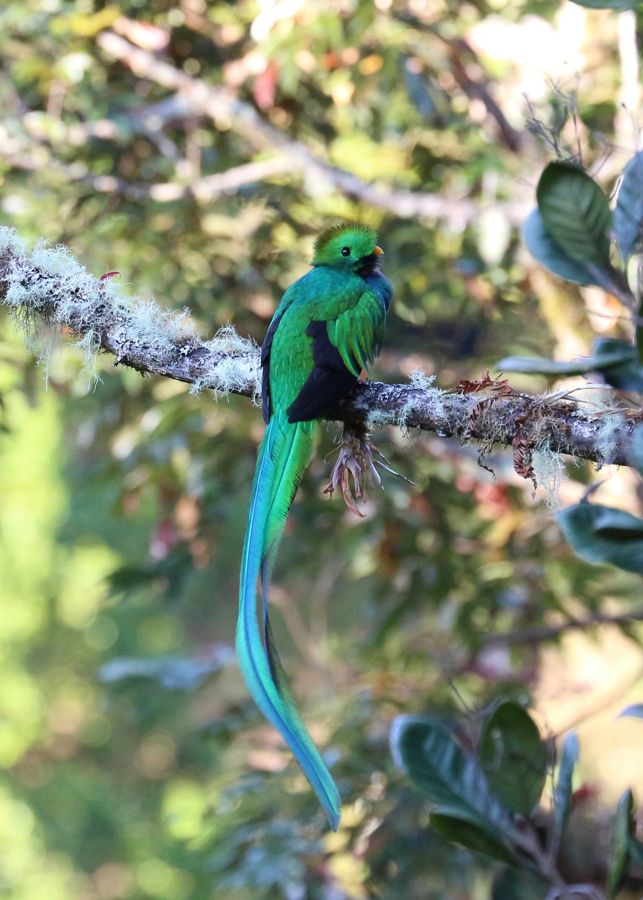
Resplendent quetzal
Pharomachrus mocinno. A bird of cloud forests such as Monteverde.
Photo: Bernard Gagnon, CC0 (Wikimedia Commons)
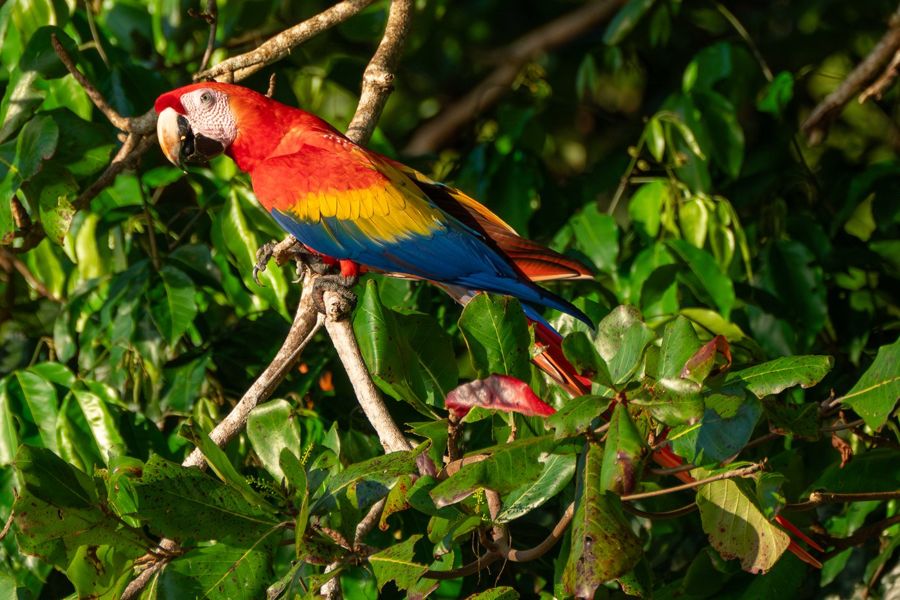
Scarlet macaw
Ara macao. Seen in Carara and on the Osa Peninsula.
Photo: Satdeep Gill, CC BY-SA 4.0 (Wikimedia Commons)
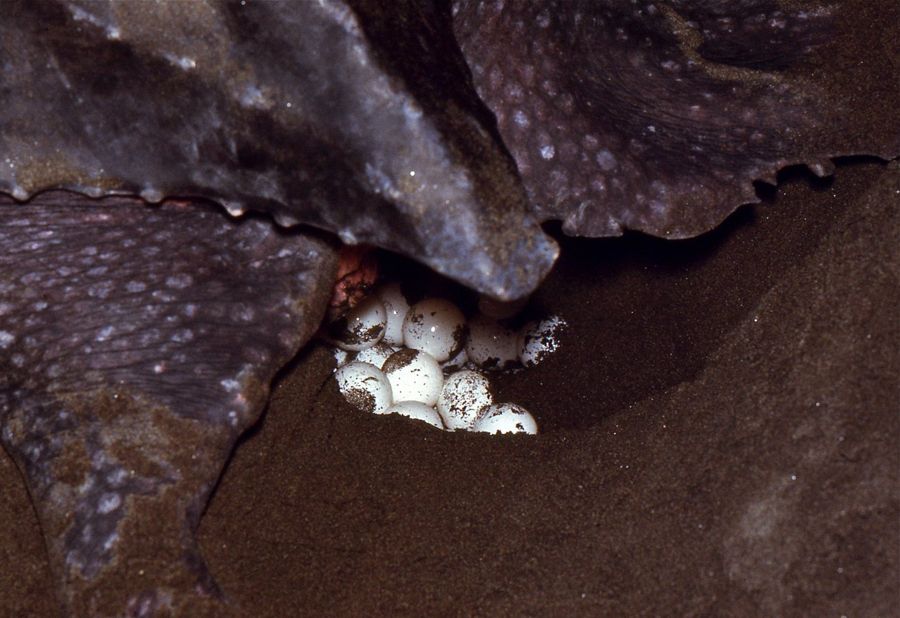
Sea turtles
They nest in Tortuguero (Caribbean) and Las Baulas (Guanacaste).
Photo: Bernard Dupont, CC BY-SA 2.0 (Wikimedia Commons)
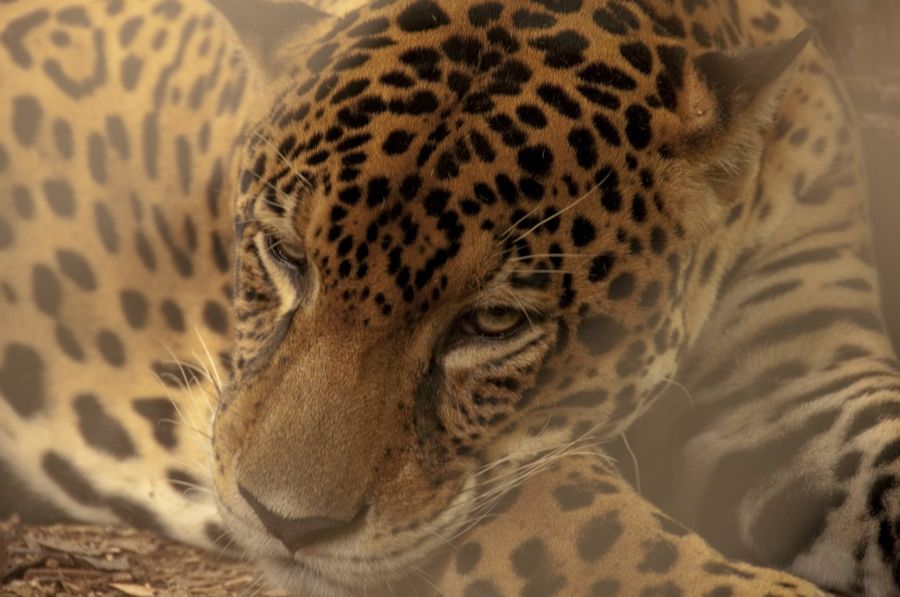
Jaguar
Panthera onca. The largest cat in the Americas, present in Corcovado.
Photo: Justin Jensen, CC BY 2.0 (Wikimedia Commons)
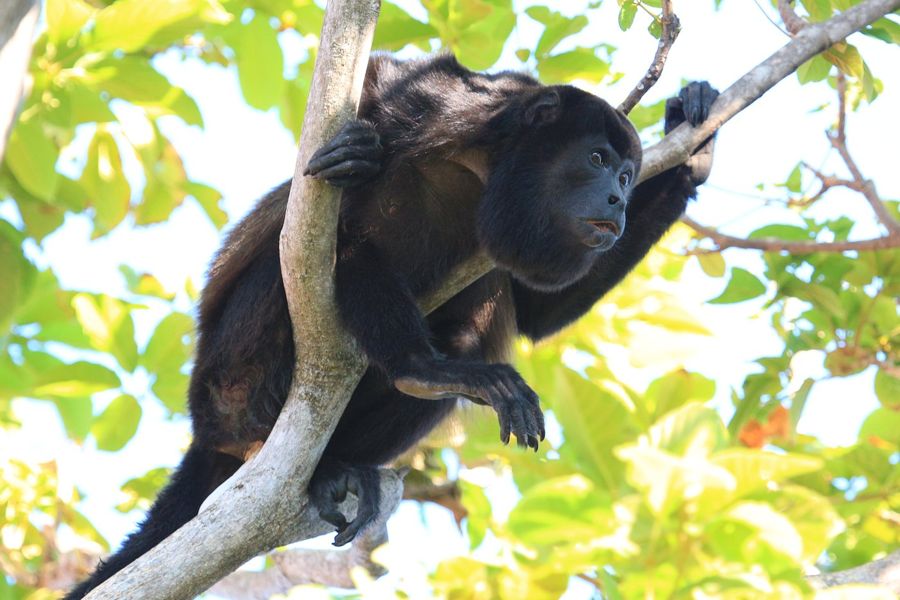
Mantled howler monkey
Alouatta palliata. Its howl echoes through the forest at dawn.
Photo: Paul Harrison, CC BY-SA 4.0 (Wikimedia Commons)

Blue morpho butterfly
Morpho peleides. Iridescent blue wings, common in tropical forests.
Photo: Bernard Dupont, CC BY-SA 2.0 (Wikimedia Commons)
Travelling to Costa Rica?
Portuguese citizens do not need a visa for tourism. See the entry requirements.
Soy Tico — Carlos Guzmán
A song celebrating Costa Rican identity.